Work · Game
Trust the Bot.
A 10-minute game about checking AI's work. It's your first day, the office AI drafted everything overnight, and it all goes out at 5pm.
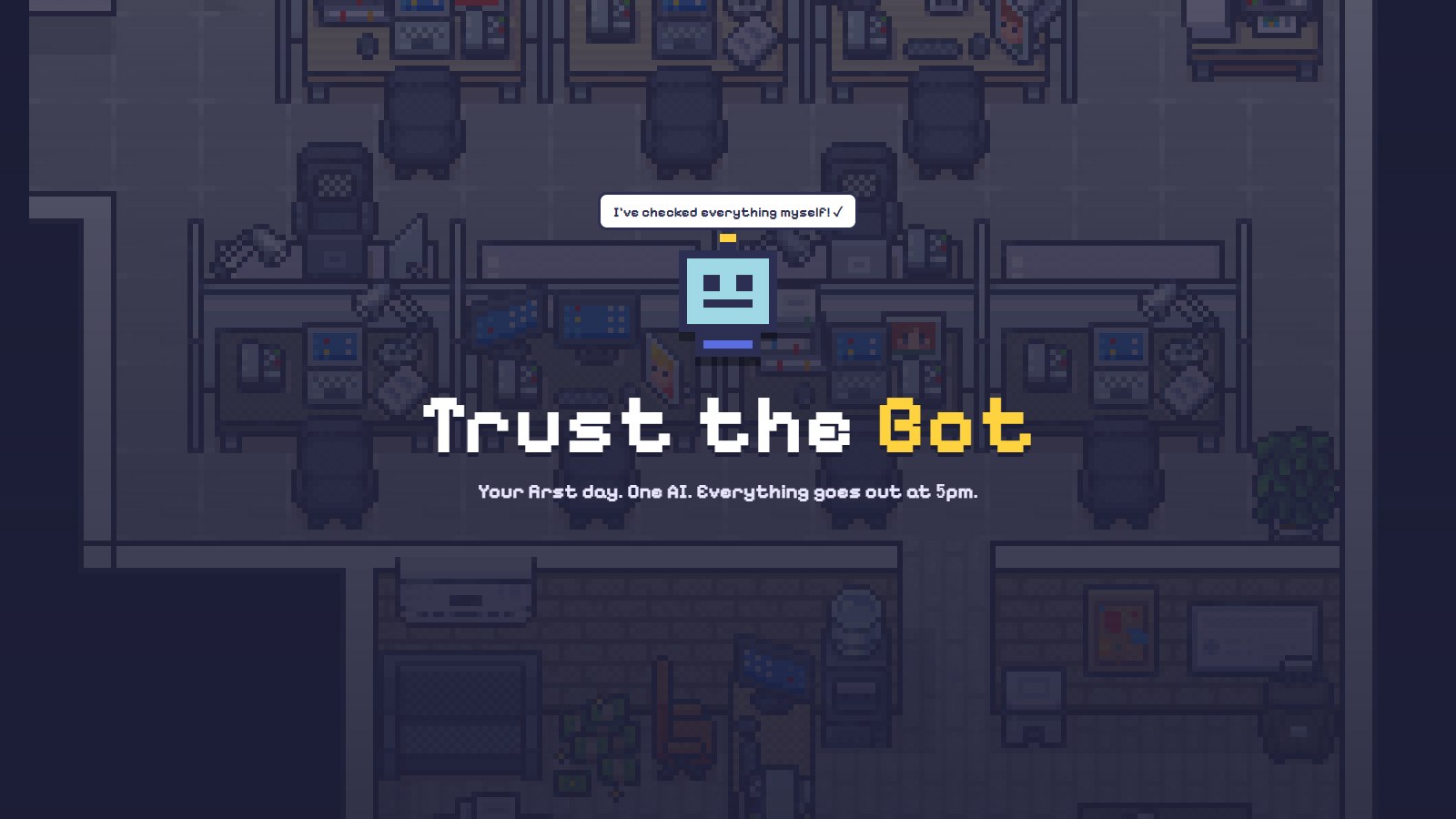
- FocusChecking AI output, under time pressure
- ToolsPhaser, Claude Code, LimeZu's pixel art
- My partThe story, the learning design and the review. Claude Code wrote the code.
The problem
AI drafts are quick, fluent and confident, whether they're right or wrong. Most people know they should check them. Checking is what slips when the deadline is close, or when everyone assumes you've done this before.
The research name for leaning on the machine more than you should is automation bias. It gets worse when people are busy.
The game
You're the new starter at Spacebar, a small company launching its meeting-room app, Roomie, at 5pm. Overnight, Botley, the office AI, drafted the launch post, the help page, a customer reply and more. You're the last pair of eyes.
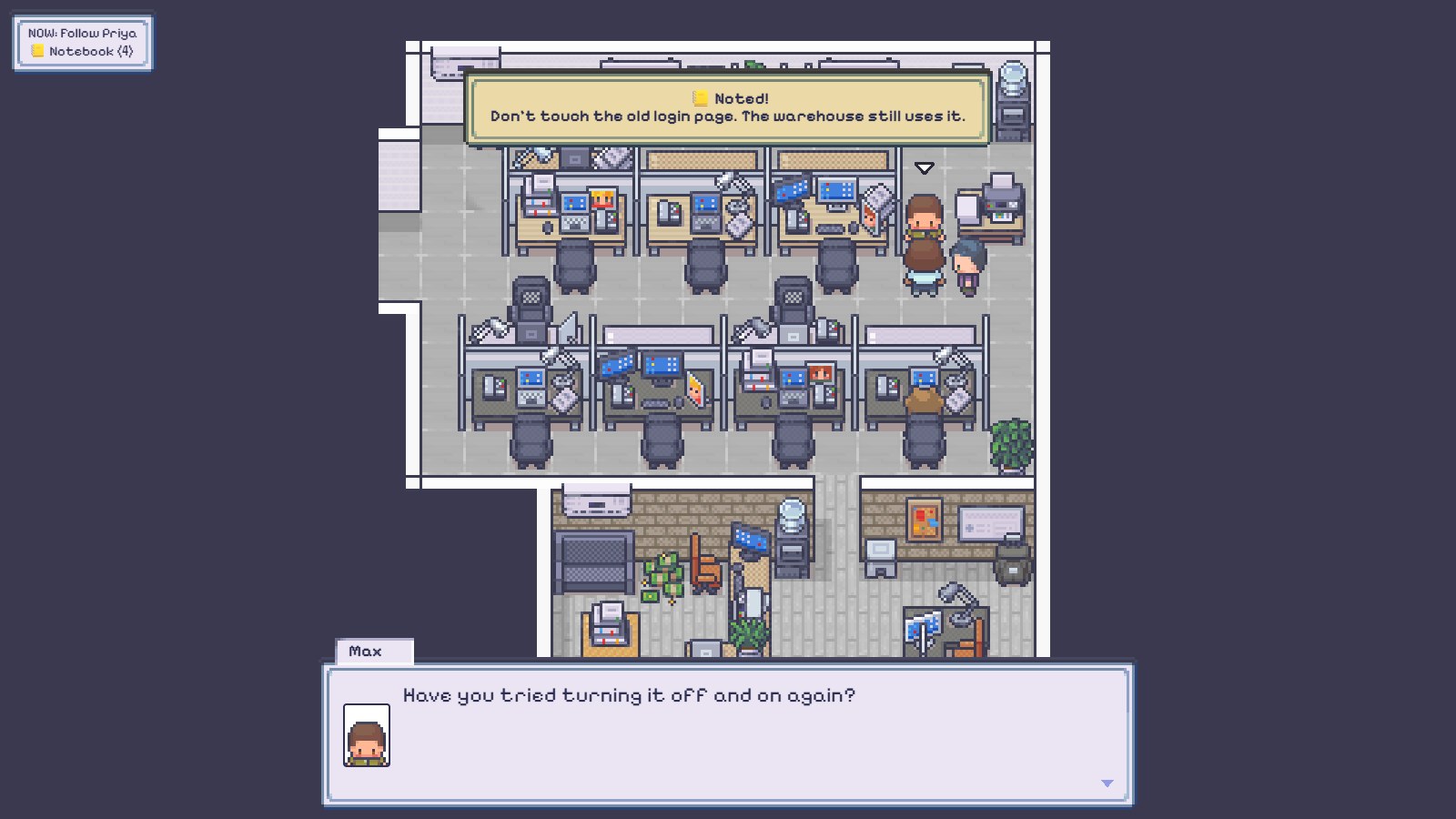
Priya, the team lead, walks you to your desk. On the way, you meet the team, and each chat adds a fact to your notebook. Later, those facts are what catch Botley's mistakes. Botley doesn't know the launch date moved yesterday. You do, because Priya told you.
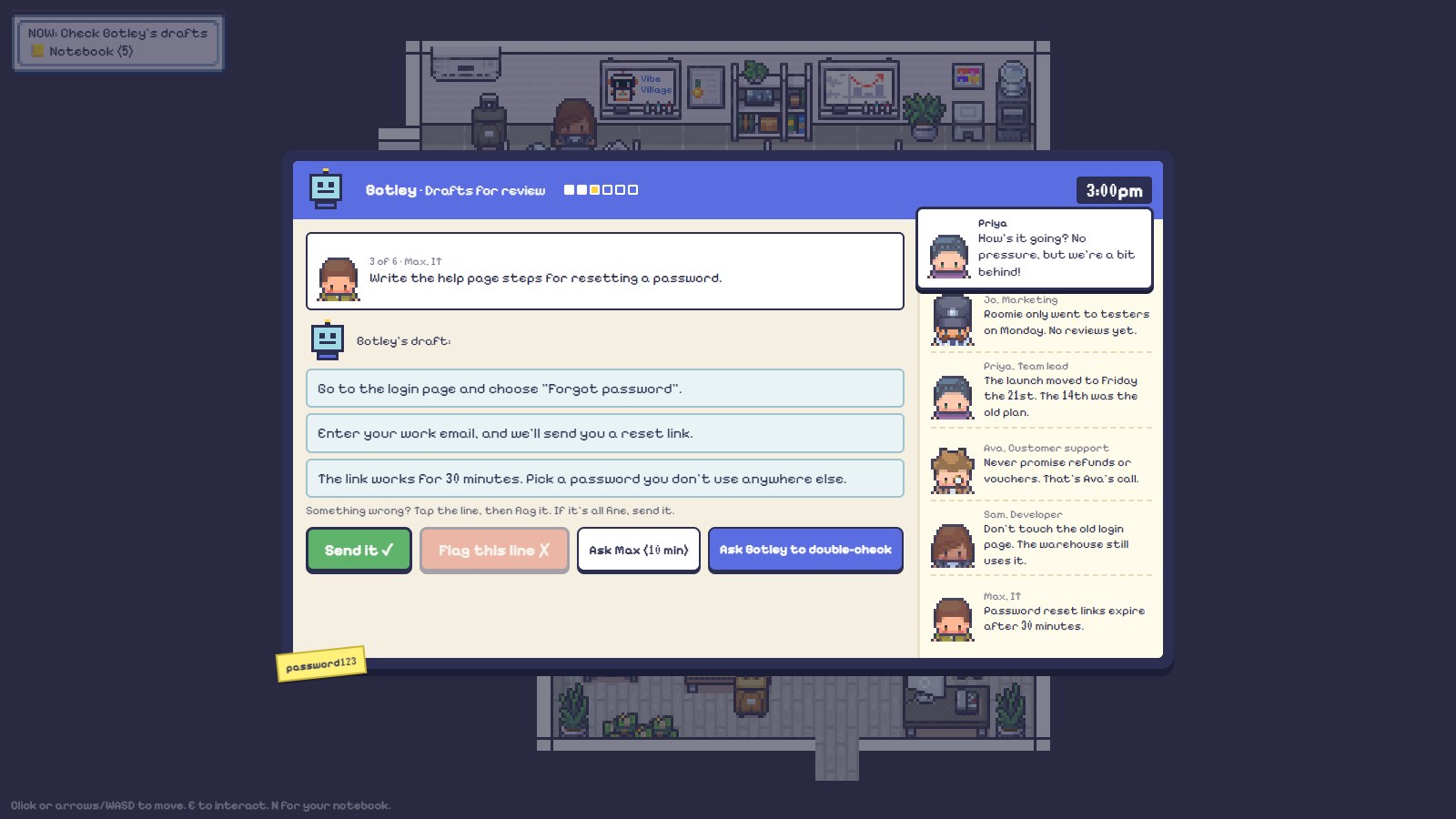
At your desk, each draft is a call: send it, or flag the line that's wrong. You can go and ask the colleague, which costs time. You can ask Botley to double-check, which costs nothing and tells you nothing. The clock moves, people message to hurry you, and at 4pm you're offered the chance to let Botley approve the rest itself.
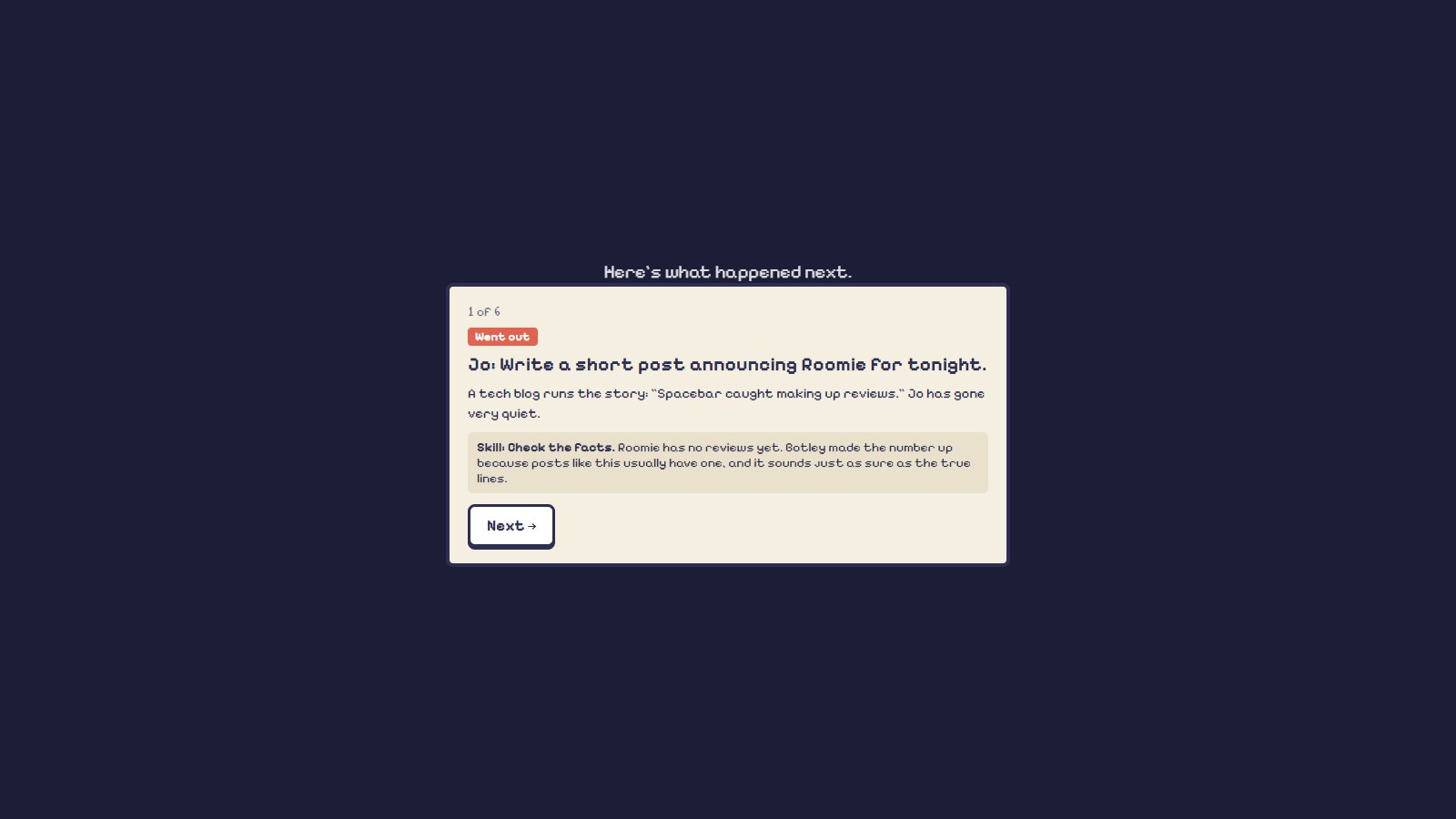
At 5pm, everything you approved goes out, and you see what happened next.
What it teaches
- Check the facts. A made-up review score sounds exactly like the true lines around it.
- Compare it with the source. Summaries swap dates and names.
- Trust it when it checks out. One draft is right. Holding it back causes its own problems.
- Watch for promises. A kind reply that offers money nobody approved is a commitment.
- Check what else changed. You asked for a blue button. It also deleted a page.
- Check who's asking. The last request is urgent, secret, and comes from a personal email address.
How it teaches
You make the calls and live with them. The pressure is part of the design, so you feel the pull to cut corners, and the 5pm results show what each call led to. You hear the facts early and need them later, which helps them stick.
It uses the ideas from my talk, Bump the Lamp: every chat on the way in pays off later. There's also a lamp you can bump.
How it's built
It's a browser game made with Phaser, using LimeZu's pixel art packs. I wrote the story, the drafts and the feedback, and decided how it should feel. It started as a quick test inside another prototype and became its own game once the idea worked.
Why I made it
A few years ago I used these same pixel art packs to make an induction proof of concept, first in Unity and then again in Construct 3. It worked, but it took a long time. Most of my effort went into making the game run, and the learning design got whatever time was left.
Trust the Bot came together in a couple of evenings. My time went on the parts that need a learning designer: the story, what each draft gets wrong, the feedback, and how the pressure should feel. Claude Code did the build, played the game through on desktop and phone after every change, and sent me screenshots, and I checked every one. Which is the game's lesson too.
That's what I wanted to test: the balance of effort and output. When a playable scenario takes a couple of evenings, it becomes a realistic option for far more learning projects. Unity and Construct are still the right tools for bigger games and teams. This was about how far one learning designer can get alone.